



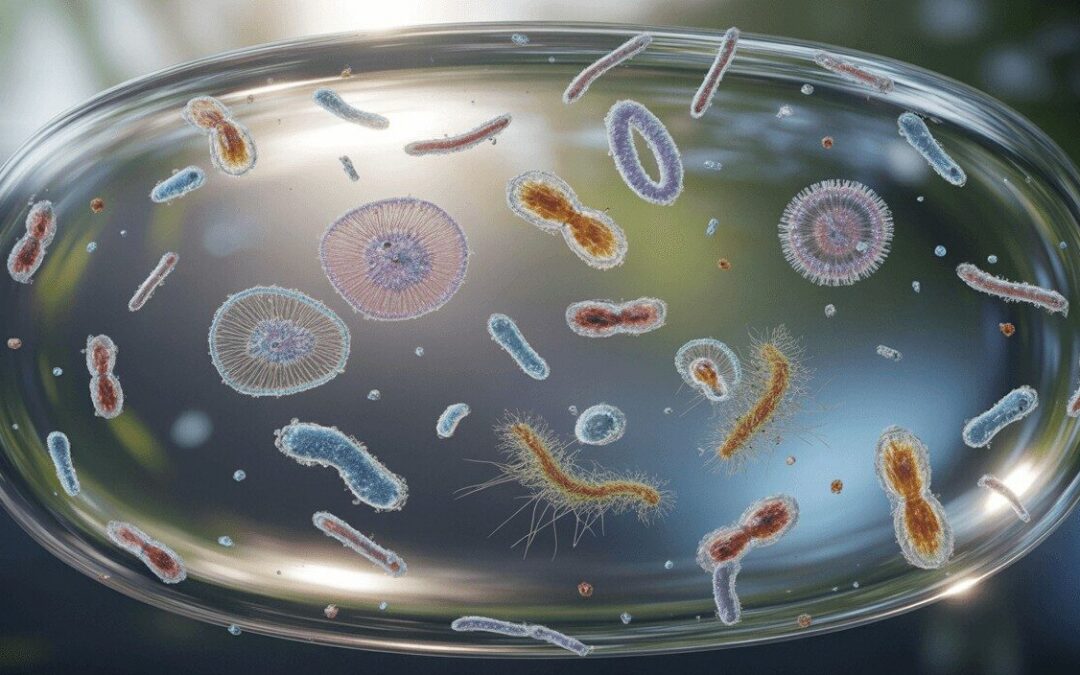
Humans aren’t the only ones who form relationships, microorganisms have their own fascinating ways of interacting, cooperating, and even competing. From teamwork that ensures survival to intricate communication systems, these tiny life forms display behaviours that mirror our own in surprising ways.
Microbial Partnerships: Strength in Numbers
Many microorganisms rely on partnerships to thrive, much like human friendships, families, or communities. Their survival often depends on mutual cooperation, where different species support one another in ways that benefit both parties.
Lichen: Nature’s Perfect Partnership
Lichen is a classic example of a successful collaboration. It consists of fungi and algae (or cyanobacteria) living in harmony, the fungi provide structure and protection, while the algae produce food through photosynthesis. This teamwork allows them to survive in extreme environments, proving that partnerships can create strength even in the harshest conditions.
Bacterial Biofilms: The Power of Community
Some bacteria form biofilms—dense, organized communities that stick together on surfaces. Within these biofilms, bacteria communicate, share nutrients, and build a protective shield against threats. Just as humans form close-knit communities for support, bacteria understand the value of working together to enhance survival.
The Language of Microorganisms: Chemical Communication
Communication isn’t exclusive to humans, microbes constantly send messages through chemical signals, coordinating their actions much like a well-connected society.
Quorum Sensing: The Microbial Network
Bacteria use a fascinating system called quorum sensing, a kind of ‘social networking’ where they release signalling molecules to detect how many of their kind are nearby. Once they reach a certain number, they synchronize their behaviour, whether it’s lighting up like Vibrio fischeri (a bioluminescent bacterium) or launching a collective defense. This coordination is key to their survival, showing the power of group decision-making.
Yeast and Fermentation: A Chemical Chain Reaction
When yeast ferments sugars, it produces alcohol and carbon dioxide, transforming ordinary ingredients into bread, beer, and wine. While humans enjoy these byproducts, the process itself is a brilliant example of biochemical teamwork, where yeast cells contribute to a greater purpose.
Microbes That Go the Extra Mile
Some microorganisms take extreme measures to ensure survival, displaying behaviors reminiscent of grand gestures or strategic alliances in human society.
Slime Molds: The Ultimate Collective Movement
When food becomes scarce, slime molds shift from individual cells to a coordinated, moving body. This massive transformation allows them to travel in search of better conditions, showcasing teamwork, adaptability, and unity, qualities that are just as essential in human relationships.
Bacterial Gene Exchange: Sharing for Survival
Bacteria engage in horizontal gene transfer, a process where they exchange genetic material to adapt and become stronger. This sharing of information ensures resilience and the ability to overcome challenges, much like how humans pass down knowledge, ideas, and resources to support one another.
Invisible Connections, Big Impact
Though invisible to the naked eye, microorganisms exhibit complex relationships built on cooperation, communication, and adaptation. Their ability to form partnerships, respond to their surroundings, and work together for survival mirrors the very essence of human interaction. The microbial world may be small, but its social networks are just as intricate and essential, as our own.
Microorganisms may be microscopic, but their interactions are nothing short of extraordinary. Whether forming partnerships, communicating through chemical signals, or adapting to their environment, they remind us that connection is a fundamental part of life, no matter the scale.