

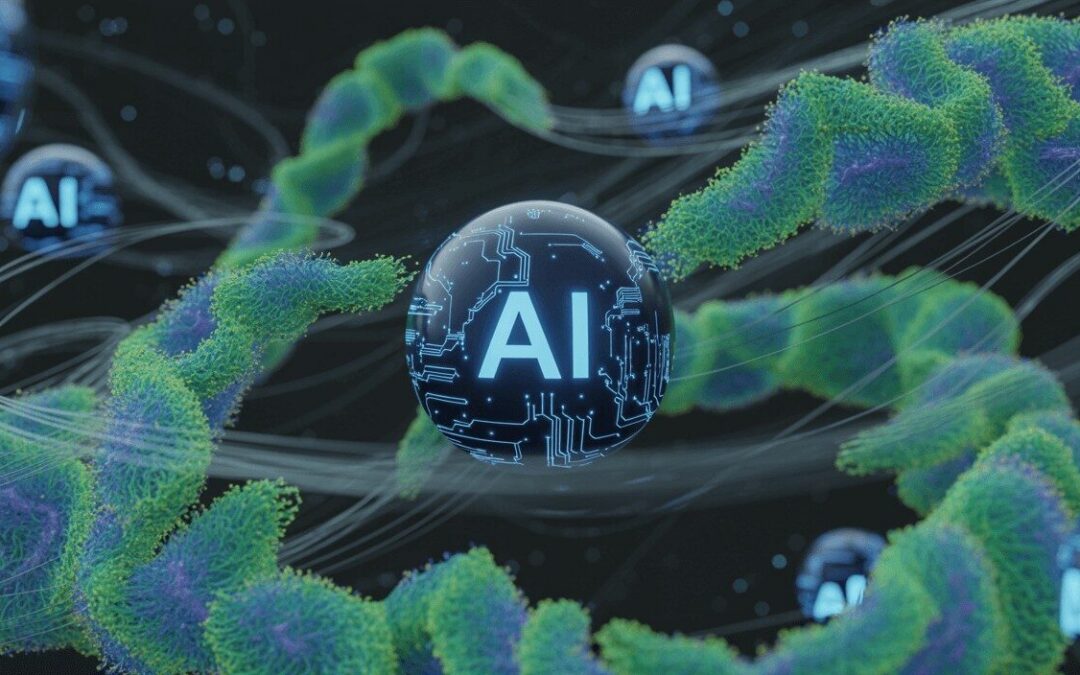
Microorganisms play a crucial role in shaping the future of our planet, particularly in the context of climate change, ecosystem functionality, and human health. While artificial intelligence (AI) has garnered significant attention for its potential impacts, the influence of microorganisms is equally profound and warrants comprehensive exploration. The future interplay between microorganisms and AI presents exciting opportunities, with each playing transformative roles in shaping industries, science, and the environment.
One of the most pressing concerns regarding microorganisms is their interaction with climate change. A consensus statement by Cavicchioli et al. (2019) emphasises that microorganisms are not only affected by climate change but also significantly influence its trajectory through their roles in greenhouse gas production and consumption. For instance, microbial communities’ degradation of organic matter is a critical process affecting carbon cycling and climate dynamics (Glassman et al., 2018). As climate conditions shift, the composition and functionality of microbial communities will likely alter, impacting their ability to mediate essential biogeochemical cycles (Jackson and Gabric, 2022). This reciprocal relationship underscores the necessity of understanding microbial responses to climate change, as they are integral to achieving an environmentally sustainable future (Hriţcan, 2023). In the future, microorganisms will need to be used more for carbon capture and reducing greenhouse gas emissions.
Furthermore, the diversity of microbial communities is essential for maintaining ecosystem functions, especially under anthropogenic stress. Research by Osburn et al. (2023) highlights that microbial diversity is a key driver of ecosystem resilience, influencing processes such as nutrient cycling and organic matter decomposition. The loss of microbial diversity can lead to diminished ecosystem functionality, particularly concerning in the face of increasing environmental pressures (Jurys and Feizienė, 2021). For example, specific soil microorganisms are vital for enhancing soil quality and agricultural productivity, indicating that microbial interventions could be pivotal in addressing food security challenges in the future (Jurys and Feizienė, 2021). In the future, AI algorithms will accelerate the design of genetically modified microorganisms for specific purposes, such as maintaining ecosystems functions.
In addition to their ecological roles, microorganisms have significant implications for public health and disease management. The advent of whole-genome sequencing (WGS) technologies has revolutionized our understanding of microbial pathogens and their resistance mechanisms (Пунина et al., 2015). By elucidating the genetic basis of drug resistance in bacteria, WGS can inform strategies for combating multidrug-resistant infections, which are a growing global health concern. Moreover, the potential of microorganisms in biocontrol and bioremediation presents opportunities for sustainable agricultural practices and environmental restoration (Santelli et al., 2010).
The future of microbial research is also intertwined with technological advancements and our understanding of microbiomes. As highlighted by Hall et al. (2018), a comprehensive framework for studying microbiomes can enhance our understanding of their influence on broader ecological systems. This approach could lead to innovative applications in agriculture, environmental management, and health, ultimately shaping sustainable practices for future generations.
In conclusion, microorganisms are pivotal in addressing some of the most significant challenges facing humanity today, including climate change, ecosystem degradation, and public health crises. Their roles extend beyond mere biological processes; they are integral to the sustainability and resilience of our planet. As we advance into an uncertain future, recognising and harnessing the potential of microorganisms will be essential alongside technological innovations like AI.
To get in touch, reach out to me on testing@smtlabs.co.za .